
This blog is dormant, but I still write every day! Please follow me on Medium and Twitter to keep up with my current work, and if you’re in Seattle, visit Gage Georgetown to see my 2018-2019 art history lecture schedule.

This blog is dormant, but I still write every day! Please follow me on Medium and Twitter to keep up with my current work, and if you’re in Seattle, visit Gage Georgetown to see my 2018-2019 art history lecture schedule.
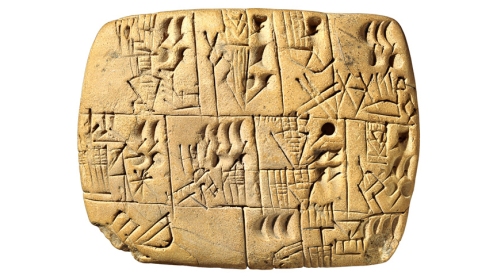
Sumerian cuneiform, the original Internet
This blog is less active these days because I’m busy writing for other publications including The Establishment, Decoder, and Huffington Post. Here are my most recent published pieces:
Who Are the Real “Victims” Here? On Trigger Warnings, Defensiveness and Anti-PC Hysteria, Medium, May 26, 2016
Our culture despises anything we perceive of as “vulnerability,” “weakness” and “victimhood” because we categorize these experiences as “feminine,” but where is the true weakness here? On the part of survivors and feminists developing tools to help everyone navigate the world with more openness, curiosity and understanding? Or on the part of a fragile ego which is triggered into a sputtering, adolescent rage upon being exposed to ideas like “privilege” and “rape culture”?
True Confessions of a White Supremacist, The Establishment, May 10, 2016
Racism is not a quality that very many of us would put into our idealized versions of self, and so the idea that we are capable of being racist, or that we might even be white supremacists deep down in our kind, well-meaning souls, is something we have a very deep aversion to confronting head-on. … But pointing a finger at everyone but ourselves is an exercise in self-righteousness, not an antidote to the deep foundation of white supremacy underlying and permeating our entire culture.
LIVE REPORT: M. Geddes Gengras @ Rare Air, Decoder Magazine, May 5, 2016
There’s no shortage of modular gear-heads making electronic music these days, but Gengras stands head and shoulders above the crowd for his inventiveness and melodic lyricism. It isn’t easy to make synthesizer music sound beautiful, unexpected, and even uplifting all at once, and Gengras’s ability to do just that sets him apart as a giant in the field.
The Next Sexual Revolution: Why Today’s Queer Teens Give Me Hope for the Future, Huffington Post, March 29, 2016
How much of the trauma our society continually inflicts on itself is rooted in our collective sexual repression? How much of our reactionary conservatism can be traced to the time someone desperately wanted to reach under the covers and feel a reciprocal connection, but couldn’t? The implications of a generation of kids who feel empowered to explore their own identities and desires with openness and self-acceptance rather than repression and self-loathing are nothing short of revolutionary, and there is evidence that this revolution is already underway.
Follow me on Twitter @emilypothast / Instagram @emilypothast

In addition to sporadically maintaining this blog, I freelance for a handful of publications from time to time. Here are three recent pieces of my writing that have been published elsewhere:
The Top 50 White Guys of 2015, The Establishment, Dec. 31 2015
2015 was a landmark year for a lot of us, but let’s be honest: no one else quite dominated it the way only white guys can. We toast your tirelessness, gentlemen!
Why I Am Probably Going to Send the Drunk Driver Who Killed My Parents a Christmas Card, The Stranger, Dec. 16, 2015
According to the US Department of Transportation, more than 10,000 people die every year as the result of drunk driving. That’s enough people to fill all the prisons in Gatesville, Texas, and staff half of them. A city of ghost prisons.
LIVE REPORT: MSHR & MAX EILBACHER @ HOLLOW EARTH RADIO, Decoder Magazine, Dec. 2, 2015
Let’s be honest: years of music fandom have left me pretty jaded about live performances, even by my favorite bands, but I have yet to witness a sub par performance by MSHR. Their shows are as consistently impressive as they are idiosyncratic, and this one did not disappoint.
Thanks for reading! Follow me on Twitter @emilypothast.
Tonight is the one-night-only exhibition of my piece for Turn at Joe Bar in Seattle! (Facebook event here.)

Emily Pothast, “Infinity Drawing.” Fabric bound mirrors, plexiglas, and a rotating collage drawing which may be manipulated to generate moving patterns. Kaleidoscope dimensions: 12″ square prism; drawing dimensions: 25″ round.
Turn is a year-long exhibition curated by artist Shaun Kardinal which began with a piece he made. Every month, a new artist gets the piece, with the instructions to make something new that (1) fits on a 16″ x 16″ x 36″ pedestal and (2) incorporates some part of the previous artist’s finished product. I took over the piece from Robert Hardgrave, and Jeffry Mitchell gets it after me.
My iteration of Turn is an infinity drawing. Using 12″ square mirror panels, I built a tabletop-sized kaleidoscope which infinitely replicates patterns placed beneath it. The image component is a prismacolor and gouache drawing incorporating fragments of Robert Hardgrave’s xerox transfer and Julia Freeman’s fabric (sourced from the two previous Turns), affixed to a large foamcore wheel which rotates freely beneath the kaleidoscope.

Beginning the work of cutting into Robert Hardgrave’s print.
Other artists slated to contribute to Turn include Kimberly Trowbridge, Sean M. Johnson, Victoria Haven and Joe Rudko. (Full list here.) Infinity Drawing will exist for only one night, so stop by Joe Bar to see it in action before it’s turned into the next thing!

Muqarnas of Fatima Masumeh Shrine, Qom, Iran. Many features of Islamic architecture are subdivided according to geometric systems that underscore the unity between sound, space, and the sacredness of science and mathematics in Islamic thought.
Over the weekend, esteemed Seattle writer and activist Ijeoma Oluo published an interesting piece in The Guardian about her own atheism, in which she observed that atheism is not immune to the kind of groupthink and faith in one’s own moral superiority that plagues other believers. With a humility often lacking in online discussions around atheism, Oluo writes,
I keep this fact in mind – that my atheism is a leap of faith – because otherwise it’s easy to get cocky. It’s easy to look at acts of terror committed in the names of different gods, debates about the role of women in various churches, unfamiliar and elaborate religious rules and rituals and think, look at these foolish religious folk. It’s easy to view religion as the root of society’s ills.
But atheism as a faith is quickly catching up in its embrace of divisive and oppressive attitudes. We have websites dedicated to insulting Islam and Christianity. We have famous atheist thought-leaders spouting misogyny and calling for the profiling of Muslims. As a black atheist, I encounter just as much racism amongst other atheists as anywhere else. We have hundreds of thousands of atheists blindly following atheist leaders like Richard Dawkins, hurling insults and even threats at those who dare question them.
I follow Oluo on Facebook and Twitter, and in the hours since her article went live, I’ve watched a veritable deluge of self-proclaimed atheists come out in droves to attempt to “debate” her, many of them taking issue with the assertion that atheism is, or could be, construed as a “leap of faith.” One Atheist Avenger accused her of posing as an atheist as an act of “intellectual terrorism,” ostensibly attempting to discredit atheists via subterfuge. It’s an ugly spectacle, rather ironically illustrating some of the negative stereotypes about atheists that Oluo addresses in her article.
When I began this blog back in 2008, my motivation for writing posts like “Richard Dawkins Proves Poem False” (I’m still super proud of that title, lol) was to grapple with precisely this facet of “New Atheism,” then on the rise and not examined nearly as critically in the media as it is now.
“New Atheists” of the Richard Dawkins ilk – i.e. #NotAllAtheists, but those who believe themselves to be in possession of some infallible, universal truth – regularly invoke “science” as the philosophical underpinning of their atheism. These atheists, who in all fairness do count some credible scientists among their ranks, seem to imagine that there is a hard wall between “science” and “faith,” let alone religious belief.

Atheist meme regarding the percieved “science/religion” dichotomy as it pertains to the rights of women
Of course there are also scientists who shy away from such black-and-white assertions, among them cosmic hottie Neil Degrasse Tyson and physicist Chet Raymo (whose book When God is Gone, Everything is Holy is among the most beautiful, nuanced treatises on scientific knowledge and faith since Teilhard de Chardin’s Le Phénomène Humain).
The reason science is able to explain the cosmos as well as it can is because it contains a self-revising mechanism. Faced with better information, one must be prepared to shed one’s dogma. And in an an era where physicists have revealed the quantum universe to be “spooky” and take for granted that certain statements may be simultaneously true and untrue, an open-minded, non-attached approach to one’s own beliefs is of paramount importance to good science.
To put it another way, good science and humility go hand in hand.
With science, we are able to greatly shrink the gap between what we believe we know and what reality is “really like,” but the gap is never fully closed. It is nonetheless reasonable to believe what science has to teach us at any given moment because we have faith in the efficacy of the scientific method.
This is our leap of faith. It’s a reasonable leap, but a leap nonetheless.

Rembrandt Van Rijn. “A Scholar in his Study,” etching and drypoint, c. 1650s
When we turn our attention from “faith” to “god,” the conversation becomes a bit stickier. Many New Atheist disciples will loudly proclaim that science has disproven God (Dawkins’ own view is a bit more nuanced, if just barely) but what exactly does that mean? What does it look like attempt to “disprove” the existence of God, scientifically speaking?
If we were to design an experiment to test whether “god” exists, our first challenge would be to arrive at a mutually agreed-upon working definition of “god.” Thousands of pages of ink have been spilled by philosophers over this step alone, which is why the I might prefer to identify myself an “ignostic” than an “agnostic” or “atheist” if I absolutely had to pick a team.
Ignosticism is the idea that the question of the existence of God is meaningless, because the term “god” has no unambiguous definition. Ignosticism requires a good, non-controversial definition of god before arguing on its existence.
One reason I’m drawn to ignosticism as a concept is because I have noticed that much “atheism” seems to begin with the tacit assumption that the god we’re all talking about when we question whether “god” exists is the monotheistic, Judeo-Christian God (though there are atheists who certainly extend their scrutiny to indigenous religions as well, a rather chauvinistic and imperialistic tendency that I’ll come back to shortly).

William Blake. “Newton,” pen, ink and watercolor, 1795
Atheism as a concept has surfaced in different cultures around the world at different times, however the New Atheism espoused by 21st century Westerners has most of its roots in the European Enlightenment. The Enlightenment was an exciting time for the history of knowledge, in that scientists and freethinkers began widely challenging many assumptions that had been enforced by the Catholic Church and developing new ways to conceptualize that knowledge. What we have still failed to do on a meaningful scale, however, is challenge many of the imperialistic dynamics that made the Church so problematic in the first place.
When the Roman Empire adopted (or more accurately, appropriated) Christianity as its state religion in the 4th century CE, the Romans, and before them the Greeks, had already been conquering neighboring nations and tribes for centuries. In her book Revelations: Visions, Prophecy, and Politics in the Book of Revelation, Princeton professor and scholar Elaine Pagels notes that when the Romans conquered a new territory, one of their signature moves was to remove whatever altar might exist in their local temple – often that of a goddess – and replace it with a statue of a Roman soldier enslaving or even raping an indigenous woman. The message is as unambiguous as it is brutal. Once you have noticed this art historical phenomenon, examples may be found everywhere (and continue into Renaissance depictions of historical Roman subjects such as the Rape of the Sabine Women).

Roman soldier with female slave. Detail of Market Gate of Miletus, Roman, 2nd Century. Miletus was a Greek (later Roman) city in Asia Minor. The relief sculptures on the Market Gate also originally included Roman soldiers battling “barbarians.”
The characterization of military conquest as a violently sexualized act underscores the rather sinister “othering” that drives empire building. As new territories are annexed, the cultural practices and beliefs indigenous to those regions are marginalized by the dominant culture demanding assimilation. Words like “heathen,” “pagan” and “barbarian” have this imperialist dynamic built into their etymology, and the racist characterization of outsiders as “savages” with “primitive beliefs” continues to underlie much colonialist activity, from the white saviorism of Christian missionaries to the Native American genocide and the mythos of Manifest Destiny.
It is important to note that in the West, this dynamic of conquest and ongoing cultural marginalization of the conquered predates Christianity, and even monotheism. But it is also accurate to say that along with capitalism, monotheism is quite possibly the most crucial adaptation in the success of what has become Western civilization.

Spanish soldiers brutalizing indigenous people during their conquest of the Americas
Before the advent of monotheism (and persisting to this day in places which have evaded colonization), what we call “religions” (Latin: re+ligare, “to tie or bind back”) were and continue to be highly individualized systems of codified cultural, artistic, and social information rooted in the geographic demands and idiosyncrasies of a specific region. Different places have different demands, and so the spirits and deities, when they are present, tend to reflect this localized relationship with their particular environment (the spirit of this animal, the god who dwells in this plant, etc.)
What monotheism does – and why it proved itself to be such a boon for colonialism – is imagine itself to be in possession of the One True God™. While it might not make sense to impose the god of this volcano or that river on people living on the other side of the planet, The One True God™ of monotheism is not indigenous to any particular geographic locale; rather he can be everywhere at once. With the One True God™, it is possible to ride into battle under the mantle of a one-size-fits-all deity which may be readily imposed on whomever happens to be living wherever you decide to point your sword next. Monotheism thus became an invaluable tool to unify [read: conquer] people on all corners of the earth under God, and then monetize that relationship accordingly.

Assistants of Raphael, “Vision of the Cross” (detail), 1520-1524. Constantine, the first Christian Emperor of Rome, is said to have experienced a vision of the cross accompanied by the words “In hoc signo vinces,” “In this sign you will conquer.”
Christianity has been such a useful tool of oppression not because it is a religion, but because it has historically been a mechanism to colonize and/or eradicate indigenous religion and replace it with a corporate facsimile, complete with its own imperialist self-superiority myth.
Today’s New Atheists have correctly identified many of the problems inherent with the institutional history of Christianity, however they have all too often neglected to shed the other Eurocentric assumptions they have inherited from its colonialist, imperialist history, particularly its myth of self-superiority. By failing to see that monotheism is the tool of imperialism and not the other way around, they have cut the head of “god” off the deity only to replace it with the head of white male European Rationalism.
(For this reason, I often joke that New Atheism is a denomination or offshoot of Judeo-Christian monotheism, a claim which reliably pisses off atheists but is not entirely inaccurate. From a distance at least, and particularly from the perspective of the people on the receiving end of Western imperialist violence, these two aging white heads are virtually indistinguishable.)
This replacing-of-the-deity with a cult of atheism does essentially nothing to address the history of racism and Othering that got us to this point, and in some cases obscures the work that needs to be done by assuming that religion-in-itself is the root of the problem.
Take for instance the militaristic rhetoric of New Atheists such as Christopher Hitchens, Richard Dawkins and Sam Harris, who have continued to serve the history and trajectory of Western monotheism as much as any fire and brimstone preacher could by painting Islam with a chillingly racist brush and depicting our ongoing imperialistic wars against Muslim nations as “humane, civilizing missions.”
Or take for instance the way that many of these same atheists constantly refer to themselves as an “oppressed minority,” appropriating the language of social justice and thereby trivializing and erasing the racialized and sexualized violence experienced by those who endure real oppression in our society. (Sorry atheists. You’re not the indigenous female slave in the Roman sculpture. If anything, you’re the white guy holding her chains.)
In both cases, New Atheism is guilty of a hubris that reeks of religious fundamentalism, made more noxious by its pretense of irreligiosity.

Crusaders chopping the heads off brown-skinned Muslims (manuscript painting, c. 1330s)
In the 21st century, it is not uncommon to hear atheists make statements like “All religion is bullshit.” While it’s true that there is literally no end to the examples of religious people committing abominations in the name of religion, a blanket dismissal of the entire category of religion is willfully ignorant of the diversity and purposes of indigenous religions, and the evolutionary, geographic and social factors that produced those systems in the first place. It is in practice no different than the Othering of “pagans,” “heathens” and “barbarians” that allows us to continually colonize and marginalize those people we have always Othered with impunity.
One might as well declare another culture’s art, music, or language “bullshit.” It’s racist, colonialist self-exceptionalism, and it’s time to knock it off.
Can we ethically call ourselves atheists, then? Sure we can, with a caveat, and Ijeoma Oluo has done a nice job of elucidating the caveat. (The attacks she has incurred for offering the mere suggestion that humility might be a flattering look for atheists only serves to illustrate her point.)
But the moment we are tempted to imagine ourselves to be superior to the heathens, we are guilty of the same self-superior audacity we despise in religious fundamentalists. And as soon as we claim to have eradicated every trace of our deeply ancient, ancestral religious history from ourselves, well, we’re laughably lost.
As Karen Armstrong notes in A History of God, religious behavior is so ubiquitous among humans that our species might as well be known as Homo religiosus. Human beings have been “religious” for longer than we’ve been fully human. There’s evidence that our paleolithic ancestors practiced burial rituals long before we even had evolved the linguistic apparatus necessary to form speech, and there is essentially no history of “art” which may be conceived of as separate from “religion” until the rise of capitalism as a religion.
This doesn’t mean that we need to believe in “god,” per se, only that those of us who believe that we have completely eradicated every trace of our deeply ancient religious tendencies from within ourselves might be well advised to discover just what the nature of that history entails in the first place, or else we are at risk of adhering to the most noxious religion of all; the faith that is completely blind to the fact that it is indeed faith.

Excavation site of Göbekli Tepe in Turkey, possibly the oldest known temple in the world (c. 10,000 BCE)
Midday Veil‘s new LP This Wilderness drops September 11 on Beyond Beyond is Beyond Records!

We’re leaving on a US tour that starts tomorrow in San Francisco (RSVP on Facebook here.) Hope to see you soon!

Over the past six years, my band Midday Veil has released two LPs and a handful of cassettes and CDRs on our own label Translinguistic Other. I’m proud of the work we have done, but it has been a long and grueling process, one which has often necessitated that I spend as much time sending out promo emails, packaging and shipping physical records all over the world as I spend working on my music and art. This is why I am thrilled that for the first time, Midday Veil will be working with an outside record label for our next album. Brooklyn-based label Beyond Beyond is Beyond will be releasing Midday Veil’s third studio album This Wilderness on LP, CD and digital formats on September 11, 2015.

Last week, we released “Babel,” the album’s first single. This song is also the album opener, and conceptually sets the stage for the rest of the record, which invokes, among other things, the complexities (and ultimately, self-destructiveness) implicit in the codifying impulse:
this wilderness amazes me but covers me with shame / when I aspire to codify the thing that has no name
This feeling may be familiar to many artists, philosophers, theologians, and even scientists; indeed, anyone who bumps up against the risk of obscuring (or even profaning) the nature of that which is observed by sheer virtue of framing one’s observations.
The rhythmic heart of the song is both electronic and acoustic, featuring Garrett Moore’s live drumming to a sequenced drum machine so that the song moves in a way that feels organic and syncopated, yet gridded. (Garrett has been a touring member of Midday Veil since 2012 but this is his first studio album with the band; his contributions have moved us in new directions that will be immediately evident to those who have been following the band’s trajectory.)

left to right: Randall Dunn and Bernie Worrell at Avast! Studios, Seattle with Emily Pothast, David Golightly and Timm Mason of Midday Veil
Anyway, as luck would have it, funk legend Bernie Worrell happened to be in Seattle working on a different project, also being produced by Randall Dunn, at the same time that we were working on This Wilderness. Randall hired David to be Bernie’s keyboard tech for this project, a fusion band called Khu.éex’ assembled by Tlingit artist Preston Singletary to combine jazz with traditional Native storytelling. David and Bernie hit it off—(you can’t not hit it off with Bernie Worrell, the man is a cosmic angel who calls successful improvisations “blessings”)—and Randall suggested that we invite Bernie to play on our album.
Bernie contributed clavinet and Hammond tracks to the final mix of “Babel.” Here’s a video I’m so grateful that I shot in the studio of Bernie improvising the clavinet line that ended up being used on the album.
Additional musicians on this track are Timm Mason (bass), David Golightly (synths), Garrett Moore (drums), Jayson Kochan (guitar), Tor Dietrichson (congas), Skerik & Steve Moore (horns) and Emily Pothast (vocals).
This Wilderness will be released September 11, 2015 via Beyond Beyond is Beyond. Preorder Midday Veil – This Wilderness here.
So much exciting stuff going on tonight!
I was recently appointed as the new co-curator of visual art exhibitions with Katherine Humphreys at Cairo in Capitol Hill. Tonight our first exhibition opens from 7 to 9 pm, featuring fiber art by Colleen RJC Bratton, painting and installation by Isabel Blue, and ceramics by Brier Kaik (aka Kiln Witch). Please stop by!

Isabel Blue, Fault Lines #8. Monoprint, grease pencil on paper, 2015
After that, tonight is also the Seattle album release party for AMOVREUX, the new LP by Portland-based experimental pop quintet Swahili, which has just been released on Translinguistic Other. Swahili has been one of my favorite bands for a very long time, and we put out their 2012 debut album as well. I’m so excited to be sharing this gorgeous new record with the world. It comes with two original tarot cards and a download code! (Stream / order here.)

Midday Veil plays Swahili’s LP release show tonight at Chop Suey with Newaxeyes and DJ Explorateur. Show starts at 8 pm. Hope to see you there!

Tonight is the opening of my exhibition Drawing God from Direct Observation at Seattle University’s Hedreen Gallery. A snapshot of an ongoing project that has been many years in the making, this show includes music, video, drawings, an installation of a miniature version of my library, and a slide lecture about just a few of the artists throughout history who have experienced “visions of eternity” and attempted to render them in physical form.
Kelton Sears recently interviewed me for Seattle Weekly and posted a preview of the show here. See you there!

Emily Pothast, “Nova (Noumenon).” Prismacolor and collage on paper, 2015.
Last Wednesday, I awoke to the horrible news that twelve people in Paris had lost their lives in a militant Islamist attack on the headquarters of Charlie Hebdo, a satirical newspaper known for their irreverent comics about religion, which included unsavory depictions of the Prophet Muhammad. Around the world, millions of people took to the streets in protest, grief, and indignation.
And why wouldn’t they? Freedom of expression, that sacred cornerstone of free, democratic societies, had been violently assaulted by an act so egregious, so unimaginably heinous, that many turned to the word “barbaric,” a word we’ll examine more closely in a moment.

Protesters hold a vigil in Paris in the wake of the Charlie Hebdo attacks, January 7, 2015
News and social media outlets responded to this tragedy at a pace that some deemed insensitive, given the cold reality of the murders. Artists around the world responded by publishing defiant, at times poignant cartoons in solidarity with the magazine, championing them as martyrs of free speech. Others asserted that the crudely blasphemous humor of the cartoons represented a right that was perhaps better off not being exercised. Still others, notably Rupert Murdoch and Richard Dawkins, contended that until peaceful Muslims “destroy the growing jihadist cancer” in their ranks, all of Islam must be held accountable for the killings.
Indeed, the idea that “all of Islam” must be held responsible for acts of terrorism; or even that Islam is a target which should be unequivocally open to ridicule is not a marginal one, but a rather mainstream view that has been espoused by Christians and atheists alike. Atheists like Dawkins, Sam Harris and Bill Maher extend this sentiment into a blanket condemnation of “all religion,” or at least religion as they identify it.
Here’s where things get sticky.

Yeni Cami (New Mosque), taken on my recent trip to Istanbul
When a contemporary atheist starts talking about religion, he is almost invariably referring to a formal institution of faith such as Christianity or Islam. He is forgetting, as the great culture theorist Walter Benjamin has asserted, that “capitalism is a pure religious cult, perhaps the most extreme there ever was.”
Indeed, when we consider that human beings have been “religious” longer than we’ve been fully human—there is evidence that Neanderthals engaged in burial rituals before we had even evolved the linguistic apparatus necessary for forming speech—the boundary between what constitutes “religion,” (Latin re+ligare, literally “to bind”) and what constitutes culture at large starts to get a lot fuzzier.
In a 2014 interview with Slate, religious historian Karen Armstrong reminds us that
“Every state ideology before the modern period was essentially religious. Trying to extract religion from political life would have been like trying to take the gin out of a cocktail. Things like road-building were regarded as a sort of sacred activity.”
She goes on to assert that the separation of church and state borne of the modern era has given rise to a more subtle form of religious activity, the nation-state as quasi-religious cult:
“If you regard the sacred as something for which we are willing to give our lives, in some senses the nation has replaced God, because it’s now not acceptable to die for religion, but it is admirable to die for your country.”

Jon McNaughton, “Stand Your Ground”
According to a definition used by many religious studies textbooks, “a religion is an organized collection of beliefs, cultural systems and worldviews that relate humanity to an order of existence.” Contrary to popular belief, neither gods nor magical thinking need enter the equation for a religion to qualify as such.
In a sense, we are all religious beings, in that we all operate within some worldview or narrative framework that creates a context for our experiences and gives us social cohesion with our peers. Dismissing “religion” as purely primitive superstition is dangerously reductive, because it allows us to contextualize religion as something someone else does, rather than something we’re all doing, all of the time.
Thus, it is my humble opinion that this conversation will never progress until we develop the tools to effectively critique our religions—which includes all of the built-in assumptions we hold sacred—rather than reflexively dismissing the entire category of religion out of ignorance of what it may contain.
The first step to offering a critique of Islam is to understand its context, and here’s where the cries of “racism” that have been posthumously lobbed at Charlie Hebdo’s editors come in: When it comes to Islam, issues of race and political power are always a subtext.
This is not to say that Islam is a “race” or should be taken as such, any more than it is one monolithic institution. But as Palash Ghosh noted in a lucid 2012 op-ed for the International Business Times,
“While most anthropologists and ethnologists would regard many Middle Eastern peoples as “Caucasian” (or, in the popular vernacular, “white’), Western media and the general public do not accept that notion. Instead, they seek to “exoticize” and “stigmatize” Middle Easterners (particularly Muslims) as something “foreign” and representing the “other.”
Thus, we live in a bizarre Twilight Zone world where Greeks, Armenians and Israelis are generally considered “white” (because they are Christian or Jewish), while Turks, Persians and most Arabs are considered “non-white” (because they are mostly Muslim or non-Christian). This, despite the fact that there are virtually no substantial physical differences between any of these aforementioned peoples.”

Jean Auguste Dominique Ingres, “Odalisque with a Slave,” 1842.
From its adoption as the state religion of the Roman Empire in the 4th century CE, Christianity has been engaged in the unfortunate practice of impressing its identity on whomever it happened to come into contact with in the guise of saving the “heathens” and “barbarians”—both concepts with racist, imperialist undertones—from themselves. While the post-Christian secular mythologies may have done away with this God in theory, the idea of the West’s privileged position atop a global hierarchy of objective correctness remains thoroughly unchallenged among today’s most vocal popular atheists. (One need only read the mad, egocentric ramblings of the once-brilliant Richard Dawkins in his old age to discern that while God might be dead, fundamentalist Western exceptionalism is alive and kicking.)
Islam, on the other hand, aims to hold submission to Allah as its highest virtue. Whether this “submission” plays out as Sharia Law or Sufi ecstasy is dependent upon a whole host of other factors, however the West’s problems with racism and oppression have given Islam a unique opportunity to stand as a magnet for those oppressed at the fringes of global hegemony.
In his 1992 essay and book Jihad vs. McWorld, Benjamin R. Barber contends that the struggles that define our era are not about religion versus non-religion, but rather a political struggle between tribalism and globalization. Tribalism manifests itself as the Jihadists’s struggle to preserve an increasingly marginalized “old way of life” that is under threat of assimilation into the Great Satan, i.e. the Borg of Globalization, a battle that is perhaps as old as the mythical battle between the sons of Adam and Eve: Cain the industrialized planter and his brother, Abel the nomadic shepherd.
In America, the power of Islam to attract the economically and politically disenfranchised as an alternative to the white man’s God has manifested itself in the Nation of Islam, the black power religion that gave us Malcom X and Louis Farrakhan. To that end, I just rewatched Spike Lee’s 1992 biopic based on the Autobiography of Malcom X. I highly recommend a revisiting of Malcom X’s story for its crucial insights into the context of racial, social, and political oppression that underlies so many current events, from Ferguson to Al Qaeda.

Malcom X
While it’s true that some of the world’s wealthiest countries are Muslim, it is worth noting that these powerful regimes are the beneficiaries of alliances with the US and Europe. Meanwhile, more Muslims have been killed in Iraq and Afghanistan since the beginning of the so-called “War on Terror” than the US lost in World Wars I and II combined. The atrocities of war do not justify the moral scourge of terrorism, of course, but it is a mistake to read terrorism as purely a response to religious offense when Muslim writers like Asghar Bukhari would like for us to understand that for the Muslim world, terrorism occurs within the context of a state of war and instability cultivated and perpetuated by the West, and from which the West benefits.
In conclusion, I would like to reassert my viewpoint that while obviously no one working for Charlie Hebdo deserved to be killed for any reason, religious, political or otherwise, we must also understand the killing and oppression that is being undertaken in the Muslim world every day in our name, and condemn this killing as vociferously as we condemn the acts of terrorists. Only when we begin to unravel the global context of the lure of Islamic extremism do we stand a chance of combating its influence and ending the perpetual reign of fear.


 translinguistic other
Recent Comments